How to Choose the Right AI Dialer for Your Business?

If you're looking for an AI Dialer, the best choice depends on your business goals, team size, call volume, CRM integrations, reporting needs, and automation capabilities. A good solution should improve agent productivity, reduce manual work, provide actionable insights, and scale with your business. Evaluating these factors before making a decision helps ensure long-term value instead of short-term convenience.
Whether you're running a startup or an enterprise contact center, selecting the right technology can significantly influence customer engagement and operational efficiency.
Why Choosing the Right Solution Matters
An intelligent calling platform does much more than place outbound calls. It becomes a central part of your communication workflow, helping teams connect with more prospects while maintaining quality interactions.
The right platform can help your business:
Increase agent productivity
Reduce idle time between calls
Improve customer experience
Generate better reporting and analytics
Scale operations without increasing complexity
Instead of focusing only on pricing, evaluate how the platform supports your long-term business objectives.
Define Your Business Requirements First
Before comparing software vendors, identify exactly what your organization needs.
Ask questions such as:
How many agents will use the platform?
What is your average daily call volume?
Do you need CRM integration?
Will your team work remotely?
Which reports are most valuable?
Do you require multilingual support?
Having clear answers prevents investing in features your business may never use while ensuring you don't miss essential capabilities.
Essential Features to Look For
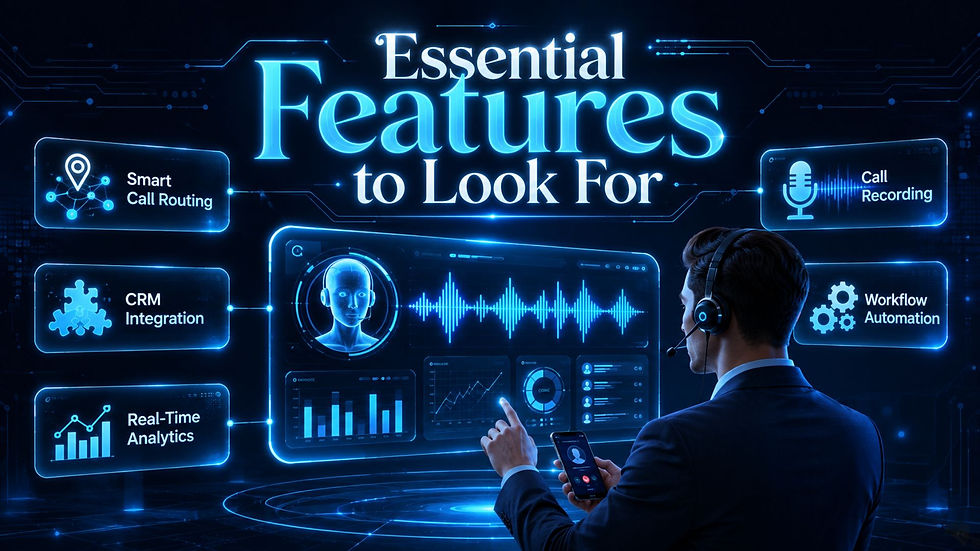
Not every platform offers the same level of intelligence. Prioritize features that create measurable business value.
Intelligent Call Routing - Smart routing ensures calls reach the right representative based on predefined rules, reducing wait times and improving customer satisfaction.
CRM Integration - A seamless CRM connection eliminates repetitive data entry and gives agents complete customer information before every conversation.
Real-Time Analytics - Live dashboards help managers monitor performance, identify bottlenecks, and make faster decisions based on actual data.
Call Recording and Quality Monitoring - Recording conversations supports employee training, quality assurance, and compliance requirements while identifying opportunities for improvement.
Workflow Automation - Modern platforms reduce repetitive administrative work through automated follow-ups, reminders, and scheduling, allowing teams to focus on conversations that matter.
Around this stage of implementation, many organizations also evaluate broader Sales Automation strategies to streamline repetitive tasks across their sales process.
Consider Ease of Use
Even the most advanced software provides limited value if employees struggle to use it.
Look for a solution with:
Clean dashboard
Simple navigation
Quick onboarding
Minimal training requirements
Helpful documentation
An intuitive interface accelerates adoption and reduces operational disruptions.
Evaluate Scalability
Your communication requirements today may be very different a year from now.
Choose software that can grow with your business by supporting:
Additional users
Higher call volumes
Multiple departments
International expansion
Advanced reporting needs
Scalable solutions reduce the need for expensive migrations later.
Security and Compliance Should Never Be Overlooked
Customer conversations often contain sensitive information.
Verify that the provider offers:
Data encryption
Secure cloud infrastructure
Role-based access controls
Compliance with relevant privacy regulations
Reliable backup and disaster recovery
Strong security protects both your customers and your business reputation.
Compare Reporting Capabilities

Data-driven decisions require meaningful insights rather than overwhelming amounts of information.
Look for reports covering:
Call volume
Connection rates
Agent productivity
Customer response trends
Average handling time
Missed opportunities
These metrics help optimize performance over time rather than relying on assumptions.
Businesses focused on b2b sales often depend heavily on detailed analytics to improve prospect engagement and refine outreach strategies.
Don't Ignore Customer Support
Reliable technical support becomes especially important during implementation and periods of high call activity.
Evaluate:
Response time
Multiple support channels
Knowledge base
Training resources
Product updates
Customer success assistance
A responsive support team can minimize downtime and keep operations running smoothly.
Read Reviews and Request a Demo
Independent customer reviews often reveal strengths and weaknesses that product pages don't mention.
Before making a final decision:
Schedule a live demonstration.
Test the interface.
Evaluate reporting.
Verify integrations.
Involve team members in testing.
Compare multiple providers.
Hands-on experience provides much better insight than marketing materials alone.
One example in this space is Callified AI, which offers AI-powered calling capabilities designed to help businesses automate customer conversations while maintaining efficient communication workflows.
Also watch this video - Meet Callified AI | Your AI Sales Team That Never Sleeps
Conclusion
Selecting the right AI Dialer is ultimately about finding a solution that aligns with your business objectives, supports future growth, improves team productivity, and delivers a better customer experience. By carefully evaluating features, security, integrations, analytics, and ease of use, you can invest confidently in a platform that continues delivering value as your organization evolves.
Frequently Asked Questions
Q1. What size business benefits from intelligent calling software?
Businesses of all sizes can benefit, from startups managing growing customer lists to large enterprises handling thousands of daily calls.
Q2. How important is CRM integration?
It is one of the most valuable features because it keeps customer information synchronized and reduces manual data entry.
Q3. Should price be the deciding factor?
No. Consider usability, scalability, support, reporting, and long-term operational value alongside pricing.
Q4. How long does implementation usually take?
Implementation varies depending on integrations and business complexity, but many cloud-based solutions can be deployed relatively quickly with proper planning.
Comments